Winnipeg Mortgage Specialist: Feb 2026 Rates & Expert Tips
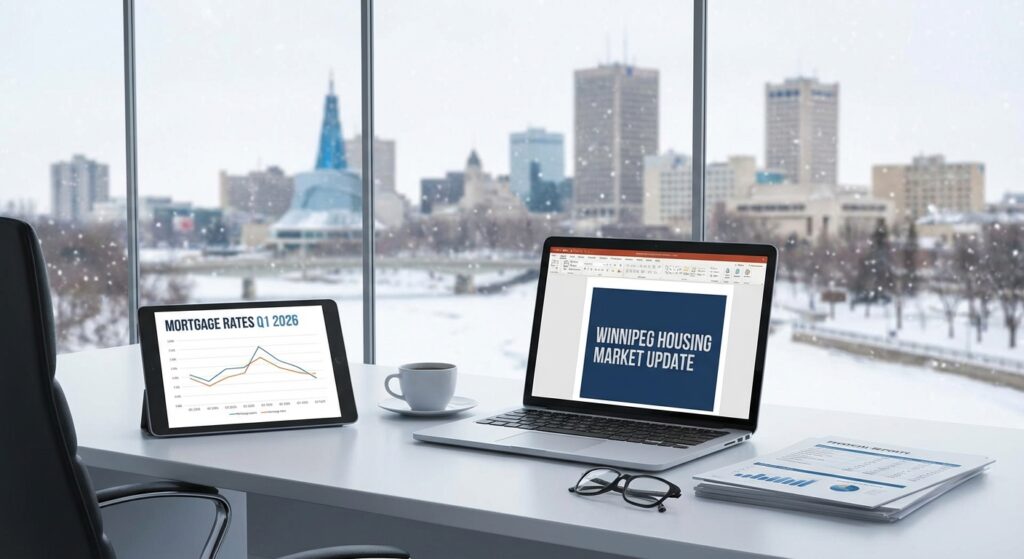
The debate between fixed and variable rates has never been more relevant than it is right now in 2026. Historically, variable rates have saved borrowers money over the long term, but the rapid hikes of the past few years have left many Canadians wary of fluctuation. In Q1 2026, the gap between fixed and variable rates has narrowed, presenting a unique dilemma for borrowers.
Fixed-Rate Mortgages offer peace of mind. By locking in a rate for a specific term—typically 3 to 5 years—you insulate yourself from any market volatility. This is often the preferred route for first-time buyers who need to budget with absolute certainty. In the current 2026 climate, bond yields have leveled out, allowing lenders to offer fixed rates that are attractive compared to the peaks seen two years ago. If you prefer knowing exactly what your payment will be every month until 2030 or 2031, a fixed rate is likely your safest bet.
Variable-Rate Mortgages, on the other hand, fluctuate with the Bank of Canada’s prime rate. While they carry more risk, they also offer more flexibility. Many variable products come with lower penalties for breaking the mortgage compared to fixed terms. For investors or homeowners who plan to move or refinance in the short term, a variable rate might still be the superior strategy. Furthermore, if economic indicators suggest a downward trend in rates later in 2026, variable holders could see their interest costs decrease, whereas fixed-rate holders will be locked in at today’s pricing.
It is also important to consider hybrid options or shorter-term fixed rates (like a 1-year or 2-year term). These strategies allow you to ride out the current uncertainty without committing for five full years. As your mortgage specialist, I analyze your risk tolerance and financial goals to recommend the product that aligns with your life—not just the product the bank wants to sell you.
For clients dealing with credit challenges or those who are self-employed, the choice between fixed and variable might also depend on lender availability. Alternative lenders (B-lenders) often have different pricing structures. My role is to navigate these waters for you, ensuring that whether you choose fixed or variable, you are getting the best possible deal available for your specific circumstances.
| Mortgage Term | Interest Rate Type | Estimated Rate Range (Q1 2026)* | Monthly Payment (per $100k) | Best Suited For |
|---|---|---|---|---|
| 5-Year Fixed | Fixed | 4.49% – 4.89% | $550 – $575 | Risk-averse buyers wanting budget stability. |
| 3-Year Fixed | Fixed | 4.69% – 5.09% | $565 – $590 | Buyers expecting rates to drop in the medium term. |
| 5-Year Variable | Floating | 5.20% – 5.60% | $595 – $620 | Borrowers with high risk tolerance & flexibility. |
| 1-Year Fixed | Fixed | 5.89% – 6.19% | $635 – $655 | Short-term ownership or bridging a gap. |
Strategies for Renewals and Refinancing in Manitoba
If your mortgage is coming up for renewal in 2026, you might be facing a “payment shock” compared to the rates you secured five years ago. Many homeowners simply sign the renewal letter sent by their bank out of convenience or fear. This is often a costly mistake. Lenders rarely offer their best rates in the initial renewal letter. By working with a broker, you can access a wider network of lenders who are hungry for your business and willing to offer competitive rates to win you over.
Refinancing is another powerful tool available to Winnipeg homeowners this quarter. With the cost of living remaining high, many families have accumulated high-interest debt on credit cards or lines of credit. Mortgage refinancing allows you to leverage the equity in your home to consolidate this debt into a single, manageable monthly payment at a much lower interest rate. Even if mortgage rates are higher than they were in 2021, they are significantly lower than the 19-29% interest charged by credit card companies.
I specialize in second mortgages and private financing solutions for those who may not fit the traditional bank “box.” If you have been turned down by your bank due to income verification issues or past credit bruises, do not lose hope. There are private and alternative lending solutions designed to help you bridge the gap, clean up your credit, and eventually move back to a prime lender.
Furthermore, for those facing the stress of potential foreclosure, immediate action is required. I have helped numerous clients pause foreclosure proceedings by arranging emergency financing. Your home is your most valuable asset, and protecting it requires expert advice tailored to the legal and financial regulations of Manitoba.
*Disclaimer: Rates and payment examples are for illustrative purposes only and are subject to change without notice based on market conditions and applicant qualification (OAC).
Q1: What is the forecast for mortgage rates in Winnipeg for the rest of 2026?
While no one has a crystal ball, most economic indicators suggest a period of stabilization. We do not expect the aggressive hikes seen in previous years. Rates are anticipated to hover in the current range, with potential slight decreases toward the end of the year if inflation remains within the target range.
Q2: Should I lock in a fixed rate or go variable in Q1 2026?
This depends entirely on your risk tolerance. If you lose sleep worrying about rising payments, a fixed rate is the right choice. However, if you have room in your budget and believe rates will fall, a variable rate could save you money over the 5-year term. We can calculate the break-even point together to help you decide.
Q3: How does a consumer proposal or bad credit affect my mortgage options now?
Bad credit does not mean “no mortgage.” It simply means we look at alternative lenders. I work with many lenders who specialize in clients with consumer proposals or bruised credit. You may pay a slightly higher rate temporarily, but we can build a plan to improve your credit and refinance to a better rate in 1-2 years.
Q4: Can I refinance to pay off high-interest debt in this rate environment?
Absolutely. In fact, it is one of the most common transactions I handle. Even with mortgage rates around 5%, refinancing is often mathematically superior to carrying credit card debt at 20%+. It can lower your total monthly cash outflow significantly, improving your monthly cash flow.
Q5: Why should I use a Winnipeg mortgage broker instead of a bank?
A bank can only offer you their specific products. As a broker, I have access to dozens of lenders, including major banks, credit unions, and trust companies. I shop the market for you to find the best rate and terms. Plus, I work for you, not the lender, ensuring your best interests are the priority.
Contact Laurie Boudreau for a Free No-Obligation Consultation
